

Hitler’s Pope#
John Cornwell
Rating: 4.0 / 5
Since traveling to Italy in the fall of 2024 and reading up on its history and culture, I’ve greatly enjoyed these focussed biopics of important individuals in Italy’s history. Hitler’s Pope by John Cornwell fits well within that curiosity, offering an engaging look at Pope Pius XII and the Vatican’s complex position during World War II. As with most narratives that touch on Hitler and the war, the subject matter is inherently compelling, but what stood out most was Cornwell’s insight into the Vatican’s inner workings during this turbulent era. Beyond the controversial wartime connections, the book also highlights how Pius XII redefined the papacy itself—expanding its global vision and responsibilities in the modern world.A fascinating and thought-provoking read overall.

On Her Majesty’s Secret Service#
Ian Fleming
Rating: 4.25 / 5
On Her Majesty’s Secret Service truly feels like a classic Bond adventure—packed with twists and turns, high-stakes excitement, an exotic setting, and a surprising thread of true love. Blofeld makes a terrific villain here, both menacing and memorable, with a convoluted plot that is slowly revealed as Bond explores and probes. Without providing and spoilers, this novel has the best – at least the most dramatic – ending in the entire series. Easily one of my favorites among Fleming’s novels, I’d give it a solid 4.25 out of 5.

Cod#
Mark Kurlansky
Rating: 3.5 / 5
I picked up Cod expecting something in the detailed, immersive style of John McPhee, but Mark Kurlansky’s approach turned out to be a bit more high-level and informal. Rather than a deep scientific study, this book focuses more on the cultural and historical impact of cod on the peoples of the Atlantic. It’s an enjoyable read, but I found myself wishing for a bit more depth and analysis.

Octopussy#
Ian Fleming
Rating: 3.5 / 5
As the final installment in my read-through of Ian Fleming’s Bond canon, Octopussy was a satisfying conclusion – a collection of short stories that I genuinely enjoyed, even if I still prefer the full-length novels. These tales feel darker and more somber than the typical Bond adventure, though Bond’s familiar confidence and suave demeanor remain intact. There’s a brooding quality to the writing that seems to reflect Fleming’s own declining health and personal struggles at the time, giving the collection an unusual somber depth.
Algorithms in Bioinformatics#
Wing-Kin Sung
Rating: 3.75 / 5
I think this short textbook serves as a good introduction to key bioinformatic algorithms. At times, details were lacking and there were minor errors, but overall the content was solid. I would have preferred a great diversity of algorithms. While the types of bioinformatic data were different, the problems presented for each were similar at their core and, therefore, used very similar algorithms. This was fun to work through as a side project, to stay sharp and learn some of the details of pattern matching algorithms, but I don’t think this would be suitable as a standalone textbook for a higher-education bioinformatics course.

K#
Tyler Kepner
Rating: 4 / 5
I grew up playing a ton fo baseball, but, after high-school, I drifted away from the sport. This was a fun return to a childhood passion, especially as one who always loved the art of pitching. Kepner demonstrated a tremendous ability to get nuanced quotes from some of the greatest players. It was delightful to get insight about relatively minor details of the game, illuminating these details that fascinate the true die-hards of the sport. This is an easy book to recommend to any lover of the game, I wish someone had given this to me when I was younger.

Rapt#
Winifred Gallagher
Rating: 3.25 / 5
This was, in general, a thought-provoking book, though often lacked in detail and became fairly repetitive. I appreciated the number and variety of angles at which Gallagher approach hed the topic of attention. There are other related books that I would recommend ahead of this one, but I wouldn’t dissuade someone from pick up Rapt, either. As I said, the book eventually became highly repetitive, almost as if the author didn’t have much else to add but needed length. Still, it was a short read, and if nothing else, brought my attention to my attention – I find it helpful to pick up a book on this topic every now and then to realign my focus on my focus.

From Russia with Love#
Ian Fleming
Rating: 4.25 / 5
Delightful addition to the James Bond series. While the fifth in the original Fleming series, this was the last one for me to read. This is a classic of the collection with a great movie, too!.

Basic Economics#
Thomas Sowell
Rating: 5 / 5
Quite the opus, but well worth the time. This is an exemplar of Sowell’s tremendous clarity of thought. It reads as if conversational, but not at all dumbed-down or amateurish. Sowell’s ability to lead a reader through logic is so effortless and clean, nothing is extraneous, nothing is missing. This should be required reading for most people as a primer to the key aspects of modern economies. The number of fallacies that are still pervasive decades after the publication of this book, is astounding and disappointing. Sowell is one of the greatest thinkers of the modern era and this book encapsulates many of his key economic teachings.

Marriage, a History#
Stephanie Coontz
Rating: 2 / 5
The title is very misleading: this is really about the modern history of marriage in the West, primarily the USA, with a particular focus on feminism’s effect on marriage from the mid-1800’s to later 1900s. I was hoping for a true history on marriage, so this was rather disappointing. To be fair, the book started off with a couple of chapters on the believed origin of marriage across the planet, but afterwards, most of history and the globe was ignored. In the end, this is more a book on feminism in marriage in the USA in the 1900’s than a broader history of marriage.

Rogue Heroes#
Ben Macintyre
Rating: 4.5 / 5
Another exemplary book about WWII espionage from Ben Macintyre. This time, Macintyre illustrates the birth and early years of the Special Air Services in the British army. More so, the creation of the SAS was the origin of the modern warfare tactic to fight with small, elite units behind enemy lines. This book is written in the classic Macintyre style of a novel-esque narrative mixing in memoirs and biographies of the key players. I always finish his books thinking, “I need to read more Macintyre,” and Rogue Heroes was no different.
Farewell to Manzanar#
Jeanne Wakatsuki Houston, James D. Houston
Rating: 4 / 5
I hadn’t, but many of my friends read Farewell to Manzanar at some point in an English class at school. Otherwise, growing up in Los Angeles in the early 2000’s, I never learned much about the internment of the Japanese during WWII. Thus, I didn’t have much background on these camps going into this book. What immediately struck me was that Farewell to Manzanar was far more generous in it’s description of the internment camp than I expected. While Houston was far from declaring it a wonderful part of her childhood, she also did not universally blame all the ills of her life, both during and after Manzanar, on this experience. I feel that were this written in today’s political climate, it would be a larger condemnation of America’s institutions and Americans, finishing with grand declarations about the woes of the oppressed. Instead, she gave a clear-eyed view of her childhood with the perspective that years of hindsight affords. She documents the conditions of the camp and how it effected the different personalities in her family. Importantly, she tries to disentangle the consequences of their actions to understand how much was driven by their character versus their condition as prisoners. Farewell to Manzanar, thought-provoking and insightful, was a good entrypoint into this difficult part of American history that I plan to investigate further.
Standing in a River Waving a Stick#
John Gierach
Rating: 4 / 5
A collection of fly fishing stories that served as a sufficient substitute for days when I was unable to get out on the local stream.

A Primate’s Memoir#
Robert M. Sapolsky
Rating: 4 / 5
My first, but definitely not my last, Sapolsky book. I came into this book not knowing much of Sapolsky or what to expect – rather, I expected something more akin to a story of a particular biological phenomenon a la Stephen J. Gould. Instead, I was treated to an enthralling tale of the author’s early scientific career. Along with thrilling stories of adventure and cultural confusions, Sapolsky has a great writing style and sense of humor. I look forward to finding more of his books.
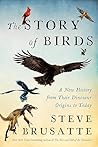
The Story of Birds#
Steve Brusatte
Rating: 4 / 5
After having loved his previous two editions in this natural history trilogy – The Rise and Fall of the Dinosaurs and The Rise and Reign of the Mammals – I instantly picked this one up from the famous Powell’s Bookstore in Portland, OR. While not as enchanting as his previous two, this detailed story of the evolution of birds was still plenty informative. I found that the Dinosaurs and Mammals books had a certain fizz about this, for lack of a better term. They lit an excitement in me that was missing in this one. It’s certainly possible that this distinction is on me, perhaps I was in a different frame of mind when reading the previous two compared to this one. Regardless, the book was still tremendously interesting, providing both the high-level view of the evolution of birds from dinosaurs while digging into fine details where warranted. I sincerely hope this series continues, there are still plenty of evolutionary branches he has yet to touch – he still has all of invertebrates!

Paris 1919#
Margaret MacMillan
Rating: 4.0 / 5
To start, a fair review of this books is difficult as I don’t believe I was the intended audience for this book. This book is most appropriate perhaps for someone well versed in European and Asian history pre-WWII than me. As a relative novice, so much of the people and topics were new to me, that I am sure I missed important details. Yet, I learned a tremendous amount and feel that this single source provided a satiating amount of information on this topic. If you want to learn about the year or so during the creation of the Treaty of Versailles, this would be a fantastic place to start. It is incredibly well-researched, providing thorough coverage of every aspect leading to the signing of the treaty, and adding some insight into the aftermath. It also discuss the turmoil and restlessness in the various regions impacted by the treaty – this was powerful context to the decisions made by the World Powers in the crafting of the document. Prior to reading this book, I felt that my knowledge of WWI was lacking (though I have read a handful of related books already this year). My understanding of it’s implications for the couple of decades preceding WWII were insufficient. While long and highly detailed, MacMillan provides a comprehensive description and discussion of the closure to WWI. Though it’s a slower read, the effort was rewarded.
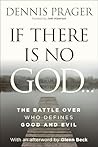
If There Is No God#
Dennis Prager
Rating: 4.5 / 5
Growing up, we would listen to Denis Prager on the radio and go to his services for the Jewish High Holy Days of Yom Kippur and Rosh Hashanah. This book was a refreshing reminder of his key teachings. His humor and genuine desire to engage with the audience come through well in this documentation of a dialog he had with high school students. An easy read – a few pages before bed was a very pleasant way to end the day.

Exploring Calvin and Hobbes#
Robb Jenny & Bill Watterson
Rating: 4.5 / 5
I came across an article recently discussing Bill Watterson’s protection of the Calvin and Hobbes Intellectual Property and Likeness. For whatever reason, it reignited the nostalgia of reading these comics as a child. I flipped through a few of the books I had that are compilations of the strips, recalling enjoying them as a child. I decided to look for books that provide more detail on the history and creation of Calvin and Hobbes and came across Exploring Calvin and Hobbes, a companion to the exhibition at Billy Ireland Cartoon Library & Museum at Ohio State University from 2014. While it’s a short book, the interview for the first half of the book with Bill Watterson and the curator of the exhibition was enjoyable. The second half of the book discussed some of the themes and motifs of Calvin and Hobbes. I think this is just the start to a series of books where I’ll learn more about Calvin and Hobbes.

Schindler’s List#
Thomas Keneally
Rating: 4.25 / 5
This novel tells the heroic story of Oskar Schindler’s attempt to save as many Jews as possible from the fate of the Final Solution during the Holocaust from inside the Reich. Simultaneously, while recounting Schindler’s journey, it documents first-hand accounts of the horrors of every stage of the Nazi’s attempted extermination of the European Jewery. The individual acts of evil described are difficult to believe in the modern era, only the more reason that they recorded and taught to future generations. The unbelievable situation of the Holocaust also forced difficult moral decisions of life and death, decisions that Schindler had to deal with constantly. Schindler’s List brings the reader through the horrors, the impossible decisions, the moral ambiguity, and the tenuous hope of Oskar Schindler and Schindler’s Jews.

Fight Club#
Chuck Palahniuk
Rating: 2.75 / 5
I think it is perhaps a generational thing, but this book just did not appeal to me like I think it did when originally published. It was dark and nihilistic with a general feeling feeling of cynicism. Because it was so far away from how I generally approach life, it just did not connect. The characters it came off as immature and resentful rather than the clever, determined “freedom fighters” that I think I was supposed to view them as. The novel is well written and has some interesting moments, I just couldn’t get past my disdain for the grimy, loser lead characters. That said, my opinions may be influenced by the sense that nihilism is overplayed and cliche in the modern era of art. If Fight Club was at the beginning or forefront of this movement in media, then my criticisms are unwarranted. Still, I can only provide my view, which as such, was underwhelmed.
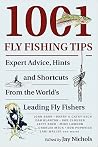
1001 Fly Fishing Tips#
Jay Nichols
Rating: 3.75 / 5
I picked this up from a (non-fly fisherman) friend’s “free library.” It covers a large spectrum of fly fishing, though it predominately focused on trout fishing. It’s fun to flick through an learn little tidbits from experienced, respected anglers. I expect to revisit sections of this book as I continue in this hobby.

Israel#
Daniel Gordis
Rating: 4.5 / 5
After a brief overview of ancient Judaism and Israel, this book focusses predominately on Israel from mid-1800s to the modern day. To start, it’s very well written and relatively easy to read; it covers a lot of ground without dwelling on topics for too long. Therefore, rather than a comprehensive text on the history of modern Israel, Gordis provides the facts of key moments and insight into the general story of the region and its peoples. It is also clear that this book was written with an eye on the current issues that Israel faces, both domestically and abroad. Gordis does not shy away from the controversies that Israel still battles today, not does he cast Israel and some evil colonial force. In my opinion, he does a great job at portraying the key themes of the Israel’s history, the beautiful and the ugly. This would be an easy starting place to recommend for anyone seeking a better understanding of the current conflicts in Israel.
The Double Helix#
James D. Watson
Rating: 4 / 5
This was a nice, short memoir recounting one of the most important scientific discoveries of the twentieth century. Many of the critiques of this book are about disagreements about the actual fact patterns or perceptions of the interactions between the key scientists, namely with Rosalind Franklin. Yet, I think this book is intended as a telling of the story from the perspective of one of the characters. Plenty of other books about the discovery of the structure of DNA include other perspectives and evidence from the time to portray a more factual or well-rounded picture, but I don’t think it reduces the importance of this one. I also enjoyed the miscellaneous, tangential stories that Watson shares. Some may find them (correctly) unnecessary or irrelevant to nucleic acid research, but they often involve other prominent contemporary scientists, fun tie-ins of history that I enjoyed. In general, they also illustrate a realistic story of discovery by including the other aspects of a scientist’s life, rather than painting a straight line through the critical insights. Overall, this is a short read that should be included in any young biologist’s reading list.
Currently reading:
- Marie Curie by Susan Quinn